Plateau Motors: a service-focused automotive website
When a driver visits an auto-repair website, the questions are usually practical: can this business help with my vehicle, what services does it offer and how can I arrange an appointment? My Plateau Motors project focuses on an automotive website presentation that brings those answers together through clear service information, a recognizable identity and a direct booking journey.
Plateau Motors serves the Sammamish area with vehicle maintenance and repair services. Its public offering covers a broad range of work, including oil changes, inspections, brakes, electrical systems, engines, transmission-related services and wheel alignment. The website needs to make that breadth understandable without overwhelming someone who may already be concerned about a vehicle problem.
Business context and local relevance
The business presents itself around servicing different makes and models and treating customers’ cars with care. The local setting is important because this is a physical service: customers need to know where the workshop fits into their routine and how to arrange a visit. Company information and a visible telephone route support that practical decision.
Visitors also arrive with different levels of knowledge. Some recognize the service they need, while others can only describe a symptom. The website therefore needs both specific service destinations and an approachable business introduction, allowing the customer to continue without mastering technical terminology first.
Project goals and visitor priorities
My approach was to make the automotive proposition clear early and keep service access close to the main message. A strong opening statement establishes the business personality, while booking actions give visitors an immediate next step. Supporting content then explains the service range, team background and appointment process.
The navigation separates Services, About Us, FAQ, Contact Us and Blog. This gives customers a choice between researching a repair topic, learning about the workshop and making contact. The structure recognizes that not every visitor is ready to book at the same point in the journey.
Design with a distinctive automotive identity
The visual presentation uses a bright lime accent, bold dark typography and automotive-component imagery. That gives the website a strong identity without relying entirely on photographs of parked cars. Engine and brake-related images connect the presentation with the actual service offering.
I approached the visual hierarchy so the business message, service categories and action links remain distinguishable. An energetic identity can still support a clear reading experience when spacing and typography have defined roles. The important information should be recognizable at a glance, while longer explanations remain comfortable to read.
Service browsing and appointment guidance
The public site lists individual repair and maintenance services with dedicated destinations. This provides a more useful starting point than a single general claim that every type of repair is available. Customers can investigate a relevant area and then decide whether to arrange a conversation or appointment.
The homepage also explains the appointment journey in stages, from booking and confirmation through vehicle drop-off and pickup. Describing the process helps connect the online action with the real workshop visit. It gives customers context about what follows rather than leaving the booking button as an isolated action.
Trust, company information and supporting content
The website includes customer-review content, a business story, team imagery and FAQ access. These elements serve different purposes: service pages explain what the workshop does, while company information introduces the people and background behind it. Together, they help visitors assess the business beyond a list of repair terms.
Promotional and educational sections provide additional entry points, but the core journey remains service understanding and contact. My UX perspective is to keep those priorities visible even when the page contains several types of supporting content. A customer looking for help should not need to work through every section before finding an appropriate next step.
Development approach and automotive usability
My development discussion centers on consistent service layouts, readable content and recognizable action treatment. An automotive site can contain long service names and detailed explanations, so the layout needs to accommodate them without losing its hierarchy. The relationship between headings, descriptions and links should remain understandable across different screen widths.
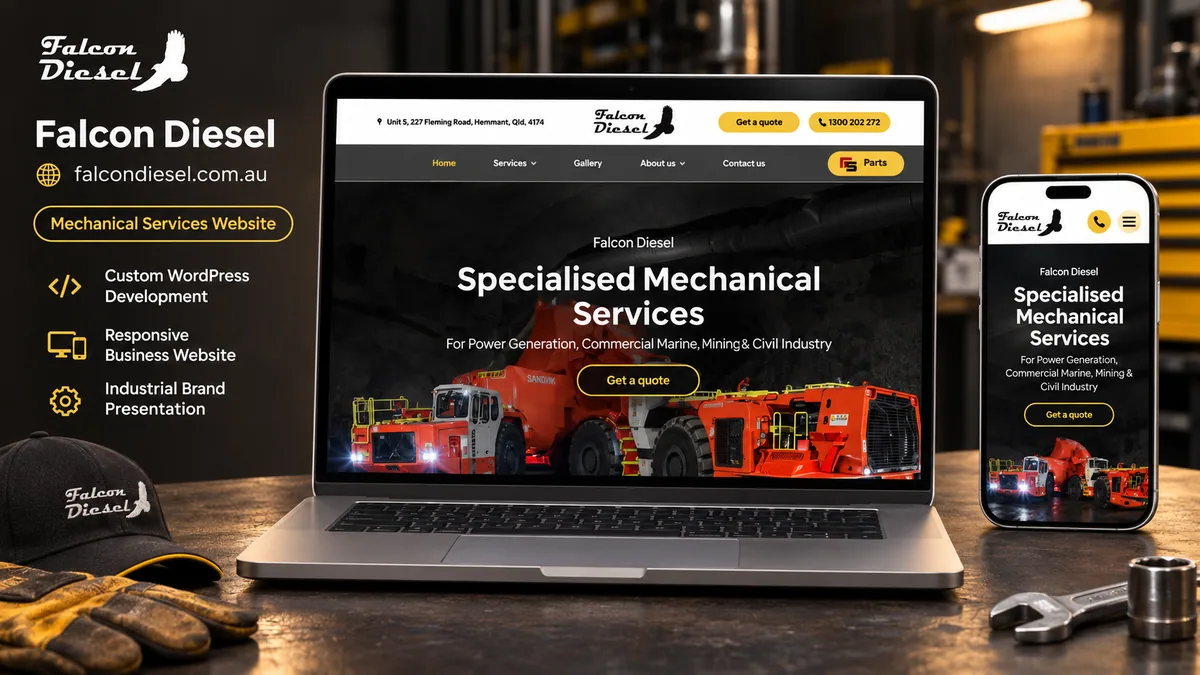
These principles are part of my frontend development services. For another automotive-sector project with a different service audience, explore Falcon Diesel.
Plateau Motors is a portfolio example of a local service website with a distinct visual personality and a practical customer journey. My focus was on connecting the workshop’s offering with the information drivers need, making it easier to explore the services and approach the business with a relevant enquiry.